
Focus on Riding: Smart Logistics for Efficient Show Jumping Training
Efficient Show Jumping Training: Less lugging, better training
A good show jumping training doesn't just begin in the saddle. Especially in smaller stable communities, clubs, or private training groups, often only two or three people handle the entire course setup.
Carrying heavy poles, moving wings, correcting distances – a lot of energy is already lost before the actual training even starts.
Yet, the energy should go where it's truly needed: into concentration, rhythm, and clean riding.
With a well-thought-out combination of sensible material choices and efficient logistics, the setup can be organized much faster, with less physical strain, and more professionally.
Why wooden poles remain important in training
In modern show jumping training, wooden poles remain the standard – and for good reason. At competitions, the diameter and weight of the poles are regulated within certain ranges. Those training at home therefore want to work under comparable conditions whenever possible.
The higher weight also ensures that the poles lie quietly in the cups, do not jump up uncontrollably upon light contact, or fly too far when knocked down. This gives horse and rider a familiar and consistent behavior from the material.
The disadvantage is obvious: wooden poles are heavy. Especially with frequent rebuilding or longer distances between the storage area and the arena, transporting materials quickly becomes a physical burden.
Checklist: How to make course setup significantly more efficient
- Plan lines cleverly: Set up obstacles so they can be approached from multiple directions or used with different distances. This reduces rebuilding during the session.
- Set up exercises flexibly: Many obstacles can be adjusted during training with just a few simple steps – for example, by placing the poles differently or making small changes to the distances. This creates different exercises from the same basic setup without constantly rebuilding the entire course.
- Transport wooden poles mechanically: With the Barcomb & Fork Set, heavy poles can be picked up, transported, and driven directly to the desired location, sorted by color. Storage can therefore also be located some distance from the arena – dry, space-saving, and organized. This not only saves energy during setup: Because the poles can be quickly and easily transported back to protected areas, the maintenance effort is also significantly reduced. Moisture, UV radiation, and lying outdoors permanently significantly shorten the lifespan of jumping poles – making them a real time and cost factor in terms of both purchase and maintenance.
- Use lightweight jump standards: While the poles deliberately remain heavy, a lot of energy can be saved with the wings. Aluminum jump standards are much lighter to carry and make quick rebuilding significantly easier.
- Store materials sensibly: Storing poles sorted by color or area of application further speeds up setup and keeps things organized, even with larger courses.
- Reduce walking distances for rebuilding: Even during the initial setup, consider which obstacles will later need to be raised, widened, or combined. Fewer walking distances mean more net training time.
Higher training quality through better organization
An efficiently set up training session improves not only the logistics but also the quality of the entire unit. Fewer interruptions ensure a better training flow and help horse and rider stay focused in a rhythm.
In show jumping training, there is constant rebuilding. Being able to move material quickly and adjust flexibly saves time, energy, and unnecessary interruptions.
The physical strain on helpers is also significantly reduced. Anyone who regularly carries heavy poles over longer distances knows back and shoulder strain all too well. A well-thought-out transport solution provides genuine relief here.
 Whatsapp
Related Products
-
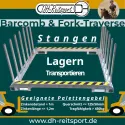
Set: Barcomb & Fork | Mobile Jump Pole Storage & Transport
"Fork" Pallet Fork Traverses and "Barcomb" Jump Pole Storage – Set Develop...
-
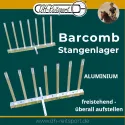
Barcomb Jump Pole Storage | Pair | Aluminum Rack for 36 Poles
Jump Pole Storage "Barcomb" (pair, as shown) Developed and manufactured in...
-
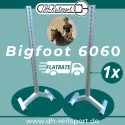
Bigfoot 6060 - The sophisticated obstacle stand - aluminium
Bigfoot 6060, the well thought-out obstacle stand - aluminium Unit price D...
-
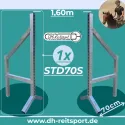
AVing STD70S Modular Wing Stand | Aluminum
Unit price Modular system wing stand with 70cm width! Jumps up to 1.60m! S...